Home>Christian Life>What Christians Can Learn From Ramadan Prayers

Christian Life
What Christians Can Learn From Ramadan Prayers
Published: February 24, 2026
Christians can learn from Ramadan prayer times, building steady prayer rhythms, deeper focus, and reverence, while loving neighbors with respect.
(Many of the links in this article redirect to a specific reviewed product. Your purchase of these products through affiliate links helps to generate commission for Christian.net, at no extra cost. Learn more)
- Summary key points: Ramadan prayer times show how a fixed rhythm can guard a life of prayer, even on busy days. Christians can learn the value of setting daily prayer windows, preparing the heart before praying, praying with focus, and letting the day be shaped by worship instead of noise. A schedule does not replace the Spirit, it can support faithfulness. It also offers a respectful way to understand Muslim neighbors while strengthening Christian devotion.
A Rhythm That Protects Prayer
Ramadan highlights something many believers already sense, prayer thrives when it has a place in the day. Muslims pray at specific times, not only when they feel like it. That structure helps prayer survive busy schedules, tired evenings, and distracted mornings. Christians have a rich history of structured prayer too, morning and evening prayers, the Psalms, and set hours in monastic communities. A rhythm is not about earning God’s favor. It is about making space to be with Him.
If you want to understand how prayer times are organized, the general guide at prayer times lays out the idea of daily scheduled prayers. Even as Christians, seeing that kind of daily framework can nudge us to ask a gentle question, what time in my day is protected for God, and what time keeps getting crowded out.
Read more: What is Forgiveness And Learn How To Forgive
Ramadan Prayers and What They Point To
During Ramadan, Muslims fast from dawn to sunset and continue the five daily prayers, with many also attending additional night prayers. The fasting season adds intensity and focus, because hunger and routine both remind the heart to turn toward God. Christians may not share the same theology or practices, yet the spiritual pattern is familiar, set aside a season, train the body, and seek God with attention.
A simple overview of Ramadan practices and timing can be found at Ramadan info. Reading a clear outline can help you understand what your Muslim classmates or neighbors are doing, and it can also spark ideas for your own spiritual habits during the Advent season, when Christians intentionally prepare their hearts through prayer and reflection.
Christians Already Have a “Prayer Clock” Too
Some Christians hear “set prayer times” and worry it sounds like empty repetition. That concern makes sense, because Jesus warned against praying for show. Yet Jesus also modeled regular prayer and often withdrew to pray. Many Christian traditions use daily prayer offices, Scripture reading plans, and prayer rules that guide the day. The structure of these practices, including their scriptural foundations, is explained in liturgical guidance published by the United States Conference of Catholic Bishops. A schedule can become hollow, but it can also become holy, depending on the heart.
To see how Islamic prayer is commonly explained, Islamic prayer info offers a helpful starting point. Christians do not need to copy, but we can learn to ask, what practices help me pray with more reverence and less rush.
Prayer Times Teach the Value of Preparation
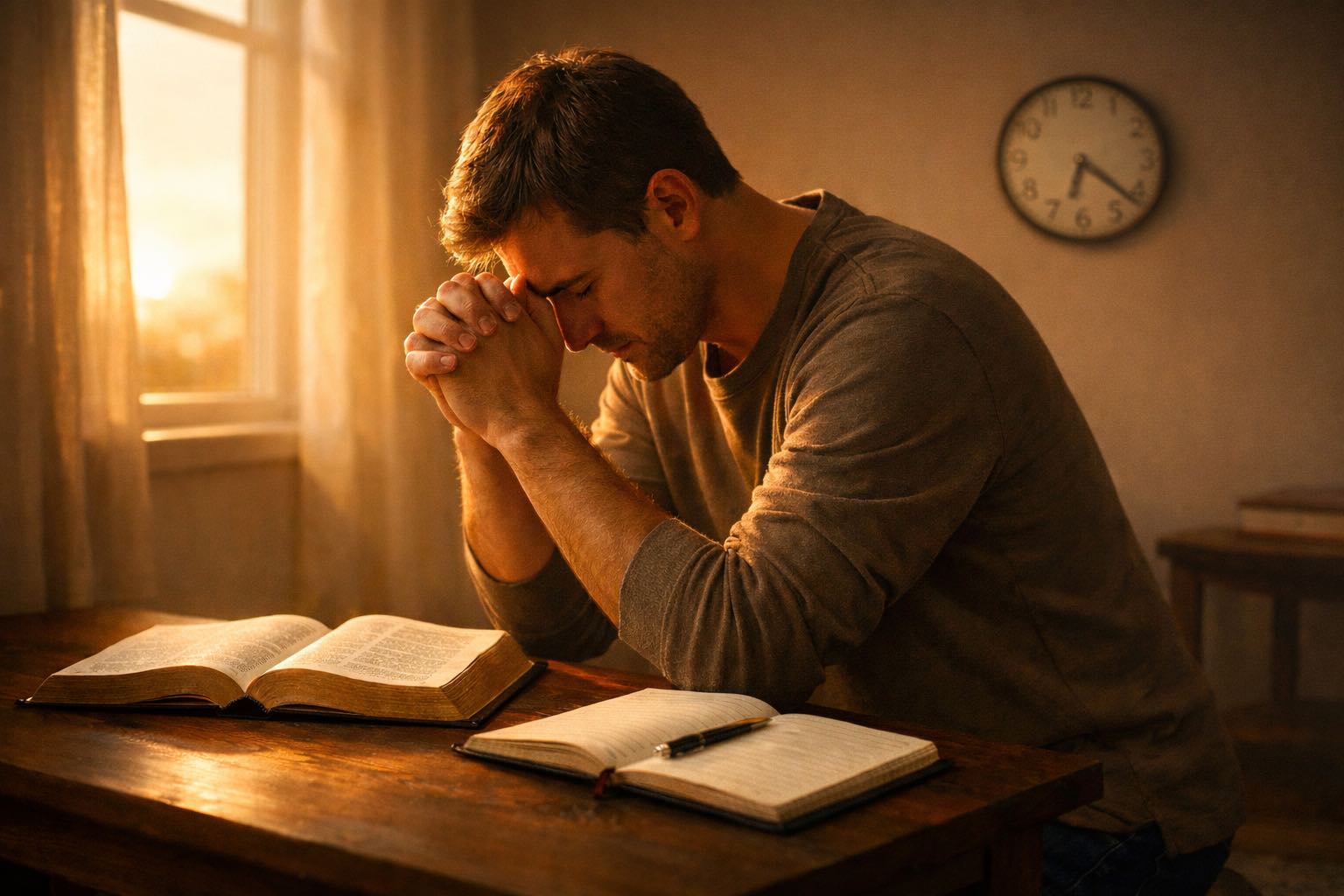
One striking feature in Muslim prayer life is preparation. There is an intentional turning away from distraction, a physical readiness, and a mental shift before prayer begins. Christians can take that same principle and build a small “threshold moment” before praying. Put the phone down. Sit still. Read a Psalm line out loud. Take a slow breath. Ask God for a clean heart. That short preparation can change the whole tone of prayer.
Prayer as a Whole Person Practice
Ramadan prayers also remind us that faith is not only thoughts in our head. It involves posture, time, attention, and habits. Christians already know this through kneeling, lifting hands, closing eyes, and gathering with others. The lesson is simple, give your body a job in prayer. Your body often helps your mind stay honest and present.
Read more: How To Learn Catholicism
Prayer That Interrupts the Day
A scheduled prayer life interrupts normal routines. It breaks the spell of constant entertainment and constant busyness. Christians can benefit from this by setting prayer check ins that are realistic. One in the morning. One at midday. One at night. Even two minutes matters. The goal is not to create guilt. The goal is to create repeated returning to God.
Seeing Prayer in Real Places and Real Clocks
Prayer times are not abstract. They live on calendars, phone reminders, and community life. Looking at actual prayer time pages can make the idea feel concrete. For example, Singapore prayer times shows how specific prayer windows are for a city. Even if you are using it only as a reference point, it can inspire your own plan, because it reminds you that spiritual life can be scheduled without being fake.
If you want to compare another city, Cairo prayer times can highlight how timing shifts by location and season. That changing schedule can remind Christians of something true as well, life has seasons, and prayer needs to flex while still staying faithful.
What Christians Can Take Without Copying
- Choose fixed prayer windows. Pick times you can actually keep, and start small.
- Use a short “start ritual.” A Psalm line, a breath prayer, or a moment of silence.
- Let prayer reshape your day. Do not wait for “free time.” Let prayer create holy pauses.
- Practice reverence. Posture, quiet, and attention can train the heart.
- Commit as a community. Shared prayer plans increase faithfulness and mutual care.
A Simple Comparison Table
| Theme | Ramadan prayer life highlights | Christian practice you can try |
|---|---|---|
| Daily rhythm | Prayer at set times through the day | Morning and evening prayer, add a short midday pause |
| Preparation | Intentional readiness before prayer | Silence, confession, a Psalm verse before requests |
| Community support | Shared practices and shared season | Pray with family, youth group, or a friend check in |
| Seasonal focus | Ramadan strengthens attention through fasting | Use Lent or a chosen month for deeper prayer habits |
| Embodied worship | Posture and movement reinforce focus | Kneel, stand, open hands, walk and pray slowly |
Key Prayer Lessons Christians Can Learn From Ramadan
- Set prayer times protect your relationship with God
- Preparation reduces distraction and deepens reverence
- Small prayers through the day build consistency
- Posture can help your heart stay present
- A shared plan with others makes prayer easier to keep
- A focused season can reset habits and restore spiritual hunger
Learning With Respect and Growing in Your Own Faith
There is a respectful way to learn from Ramadan without blending beliefs or pretending differences do not matter. The Church has long encouraged respectful understanding alongside doctrinal clarity, a principle reflected in teachings preserved by the Vatican. You can honor your Muslim neighbors by understanding what they practice, and you can let their commitment challenge you toward deeper devotion to Christ. You do not need to copy the form to learn the wisdom. You can take the principle, prayer needs intention, and bring it into your own walk with God.
If you want one more city example to keep the idea grounded in daily life, Dubai prayer times shows another schedule shaped by daylight and location. That simple reality can remind you that the Christian life is also lived on real clocks, in real places, with real responsibilities, and God meets you there.
Let Their Commitment Push You Closer to Jesus
Let Ramadan prayer times challenge you in a gentle way. Guard a daily space for prayer. Show up even when you feel tired. Prepare your heart. Use Scripture to guide your words. Ask the Holy Spirit to make your time with God sincere. Then watch what happens over weeks, not minutes. Faithfulness often grows quietly, one prayer window at a time.